

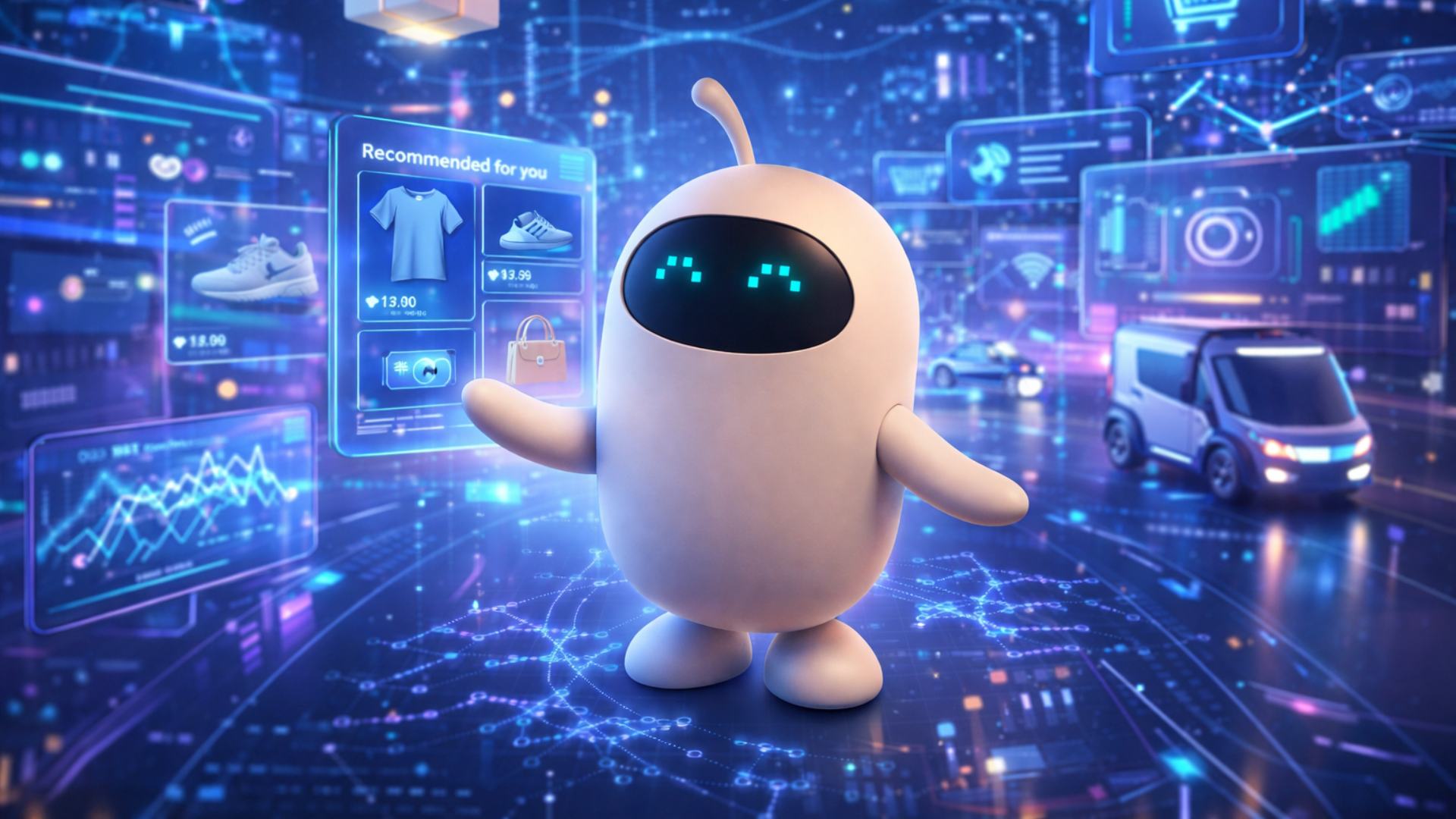
We are witnessing one of the greatest transformations in the history of marketplaces, the future of AI-driven e-commerce has begun.
Artificial Intelligence (AI) has moved from being a competitive advantage to the core of e-commerce strategies, redefining everything from the consumer experience to operational management and strategic decision-making.
By 2030, we will see a landscape where data, automation, and machine learning are deeply integrated into every stage of the customer journey.
In this article, we objectively and thoroughly analyze the main AI trends in e-commerce through 2030, considering consumer behavior, technology, logistics, marketing, customer service, and data governance.
The focus of this content is to offer a clear, actionable vision aligned with the real transformations of the digital market.
However, we know that with AI, everything can change in a matter of months.
Full-Scale Predictive Personalization
First, personalization is rapidly evolving from a reactive model to a predictive one.
By 2030, AI will be able to anticipate consumer needs even before they manifest an explicit intent to purchase.
Advanced machine learning systems will analyze browsing history, consumption patterns, multi-channel behavior, geographical context, seasonality, and even emotional cues.
The result will be the delivery of hyper-personalized offers, dynamic storefronts, and recommendations adjusted in real-time.
In conclusion, this personalization will not be limited to products, but also to dynamic pricing, delivery times, payment methods, and individualized communications, significantly increasing conversion rates and average order value (AOV).
Intelligent and Unified Omnichannel Experience
In short, the fragmentation between channels is set to disappear.
AI will enable a truly integrated omnichannel experience, where consumers move fluidly between marketplaces, online stores, social media, messaging apps, and physical locations.
By 2030, intelligent algorithms will be responsible for unifying data from all touchpoints, ensuring consistency in information, offers, and brand voice.
The consumer will be recognized instantly, regardless of the channel used.
Furthermore, AI will allow for the orchestration of buying journeys, identifying the best time, channel, and approach for each customer based on conversion probability and Lifetime Value (LTV).
Customer Service with Advanced Conversational AI
Automated service will no longer be merely operational.
With the advancement of conversational AI, virtual assistants and chatbots will evolve into true relationship agents, capable of understanding context, intent, history, and even linguistic nuances.
By 2030, these systems will resolve most pre- and post-sale demands—such as product inquiries, order status, exchanges, returns, and technical support—with a level of precision close to that of a human.
Beyond reducing costs, AI in customer service will increase satisfaction by ensuring immediate, personalized, and consistent responses 24/7 across multiple languages and platforms.
And GoBots is the pioneer when it comes to AI for marketplaces and e-commerce.
Intelligent Marketing and Sales Automation
Rule-based automation will be replaced by AI-driven automation.
E-commerce platforms will use algorithms to continuously create, test, optimize, and scale marketing campaigns.
By 2030, AI will be responsible for:
- Defining target audiences with the highest conversion potential.
- Automatically creating ad variations.
- Adjusting media spend in real-time.
- Predicting churn and activating retention strategies.
- Identifying cross-sell and upsell opportunities.
Predictive Inventory and Supply Chain Management
AI will play a central role in supply chain optimization.
Advanced algorithms will allow for high-precision demand forecasting, considering factors such as sales history, market trends, consumer behavior, weather, and economic variables.
By 2030, inventory management will be largely autonomous, with systems capable of:
- Automatically adjusting stock levels.
- Reducing stockouts and overstock.
- Optimizing logistics routes.
- Anticipating operational bottlenecks.
- Minimizing storage and transport costs.
Intelligent Search and Voice Commerce
AI will drive the evolution of semantic search, allowing users to find products through natural language, images, and voice.
By 2030, voice commerce will be consolidated, with smart assistants capable of recommending, comparing prices, finalizing purchases, and tracking orders using only verbal commands.
Fraud Prevention and Advanced Security
As digital commerce grows, so do fraud risks.
AI will be essential for ensuring security and trust. Intelligent systems will analyze thousands of variables in real-time to identify suspicious patterns and block risky transactions before they cause losses, ensuring a frictionless experience for legitimate consumers.
AI-Driven Strategic Analysis
Decision-making in e-commerce will become increasingly data-driven.
AI-based analytics tools will transform vast volumes of data into clear, actionable strategic insights. By 2030, managers will rely on:
- Growth and demand forecasts.
- Scenario simulations.
- Automatic action recommendations.
- Predictive performance indicators.
Ethics, Governance, and Transparency
With the advancement of AI comes increased responsibility.
By 2030, issues such as data privacy, algorithmic transparency, and regulatory compliance will be at the heart of e-commerce strategies.
Companies that invest in AI governance and ethical data use will build stronger, more sustainable relationships with their customers.
Conclusion: Intelligence-Oriented E-commerce by 2030
In summary, the future of e-commerce will be intelligent, predictive, personalized, and highly automated.
Artificial Intelligence will not only optimize processes but completely redefine how brands interact with consumers.
By 2030, e-commerce won’t just be digital—it will be intelligent by nature.


